
Rumeurs et bruits avant-coureurs des frontières de l'Est
Middle Eastern and East Asian Glimpses – Sylvan GHARBI
Erosion of writing skills – English Street
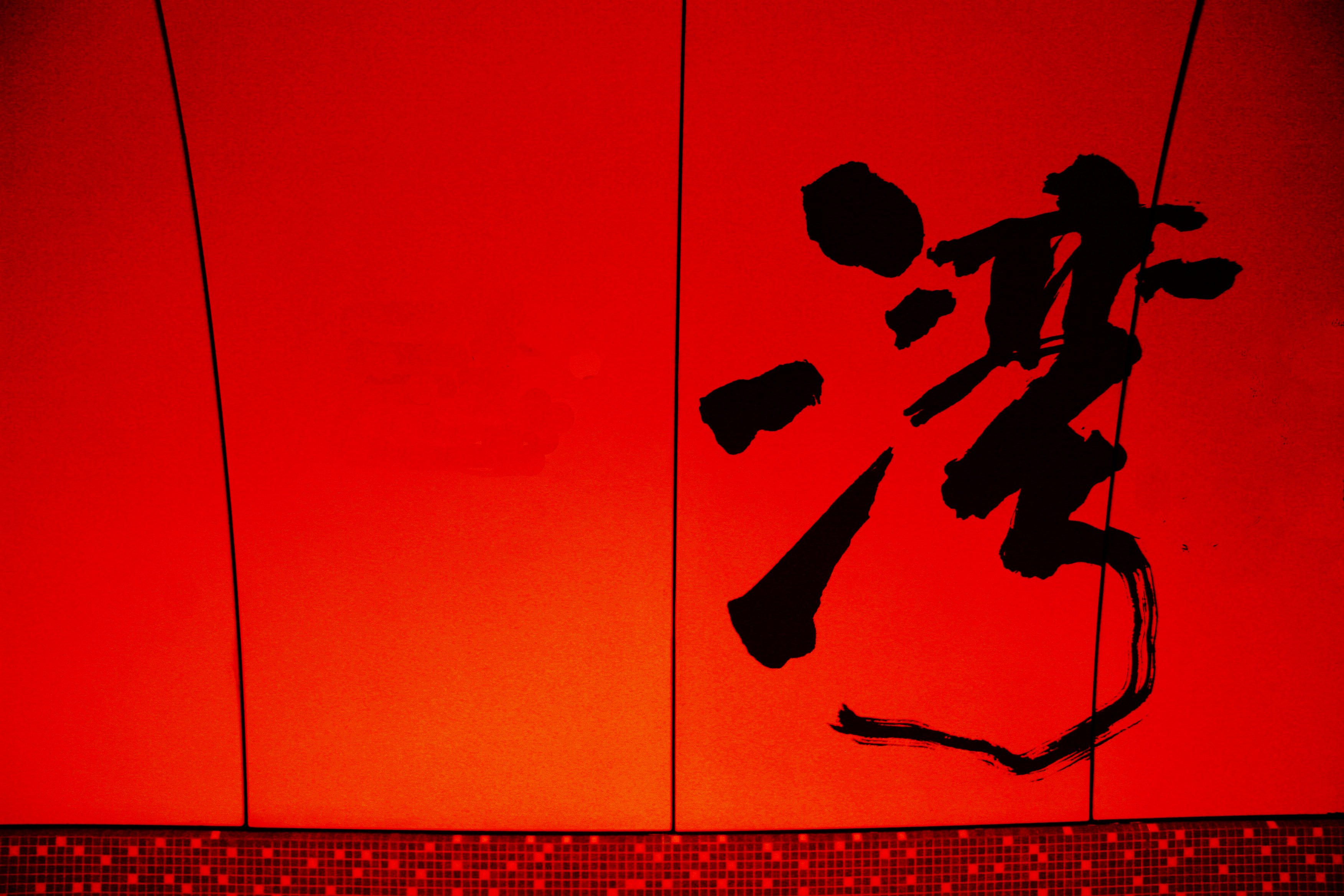
In the digital era, speed and connectivity have come with a surprising price tag: a decline in the standard of the writing language
Edward Wu has just received a short message service (SMS) text message in Chinese. As he starts typing his reply, using Roman letters, the texting software in the phone automatically translates whatever he types into a series of Chinese characters on the screen.
Without the help of the software, Wu admits, he’d have a difficult time.
“I can’t write well in Chinese any more!” he says. “If I didn’t have a computer or a phone, it would be pretty difficult.”
Technological advancement may have led to a decline in the standard of the written language. This is especially prevalent among native Chinese speakers, according to linguists.
Chinese is written using thousands of distinct characters, each one a complete word. Gaining full writing proficiency takes extensive study and requires active practice to be maintained. Today, many people say, native Chinese speakers using the new communication technologies are forgetting how to write.
“This is a crucial issue,” says Professor Xun Yao of the School of Chinese at the University of Hong Kong (HKU). “The young generation relies on computers and do not write any more,” she says. “Compared with today’s students, students 50 years ago had a much higher writing capability. It is a common concern not only here in Hong Kong but also in the Mainland and Taiwan.”
Dr Sue Meng, a researcher and professor at the HKU School of Chinese Studies says deterioration in writing skills has been measured. “Back in the 1990s, research was carried out. People were tested again years later. The error rate was higher because they had hardly practiced character handwriting.
Dr Meng has herself has experienced the danger of over-reliance on computers: “I have moments while handwriting in Chinese when I feel unsure,” she admits. “I have to stop and think of what character I need. This really comes from not writing by hand. Recognising the characters is not a problem for me, handwriting is. It is caused by excessive use of computers and pinyin.”
Pinyin is the most widely used system of transliterating Chinese words into Roman letters. But many Chinese words have the same sound. For instance, the character 是means “to be”, and 事means “thing”, but both are pronounced in the same way, and are rendered in pinyin as “shi”. If someone types “shi”, the phone’s computer won’t necessarily know which character is being called for. Dr Meng says there is a tendency to make mistakes one would not make if handwriting were part of the equation.
Since people in Hong Kong are addicted to software that writes for them, “they just can’t remember the whole picture of characters. It is worse in the Mainland with pinyin,” says Professor CM Chan, a Chinese language instructor at HKU. “Students are really forgetting everything. Pronunciation is misleading them. They tend to mistake [one] character for another.”
Eve Ho, a Chinese Singaporean, learnt English and Mandarin at the same time, and was assumed to have full proficiency in both.
She contradicts this: “Sure, I speak, read and write both, but English is lot easier,” she says. “I have no problem putting the words in pinyin. When it comes to writing the actual Chinese characters, it is like hitting a wall. In Singapore, everybody is supposed to be bilingual. Well, that’s not always true unless you work with China and are exposed to Chinese and practice it,” says Ho.
She says the situation is becoming worse as the digital revolution progressively takes over people’s lives. “I cannot write in Chinese any more,” says Ho. “I haven’t practiced for a long time. If you asked me to write a letter in Chinese characters, I would not be able to. I think this situation will deteriorate. And I believe the more we use computers, the worse our writing ability in Chinese [will become].”
All writing systems suffer
This written language disability is not only being experienced among Chinese speakers today.
“We can draw a parallel between the young generation of Chinese and Europeans with spelling deficiencies,” says Picus Ding from HKU’s Department of Linguistics. “The new technological appliances do not promote the physical writing exercise. We write less and less. This is becoming an issue.”
Beijing has recently addressed this computer age issue through a series of studies and talks between experts from Hong Kong and Taiwan.
Ding concludes that all writing systems over the course of history have had one single purpose: to keep records of words on paper. “If societies deem the process to be inadequate, people will probably make greater use of communication technology.”
Writing systems, as they are known, might one day be relegated to ash heap of history.
 Rumeurs et bruits avant-coureurs des frontières de l'Est
